Picture your morning: do you want waves and sunrise over the Atlantic, or calm water and a quiet cruise at dusk on the Intracoastal? If you are deciding between oceanfront and Intracoastal living in Ponte Vedra, you are not alone. Each setting offers a distinct lifestyle, different boating options, and unique maintenance and permitting requirements. In this guide, you will find the practical tradeoffs that matter in St. Johns County so you can buy with confidence. Let’s dive in.
Where each waterfront sits
Ponte Vedra Beach stretches along Florida’s Atlantic barrier‑island shoreline in unincorporated St. Johns County. Oceanfront parcels line A1A and face the open Atlantic. Intracoastal properties sit to the west on the Intracoastal Waterway, the Matanzas River, and tidal marsh channels, including pockets along Roscoe Boulevard, Palm Valley, and within planned communities with marsh or river frontage.
Inventory is limited on the ocean side due to the constrained shoreline, which supports a premium for direct Atlantic frontage. Intracoastal frontage is more plentiful, often with deeper lots and private docks in select corridors. Typical home values in the greater Ponte Vedra Beach area are in the high six‑figure to mid‑seven‑figure range, with luxury waterfront reaching multi‑million‑dollar levels.
Lifestyle differences at a glance
Oceanfront lifestyle
You get direct beach access and wide Atlantic views with a strong sense of visual privacy toward the water. Daily life centers on sand, surf, shelling, and sunrise. Public beach access points and walkovers can concentrate beachgoers at specific locations, so it helps to note nearby access points when you evaluate a parcel. If your top priority is a true beach lifestyle, oceanfront delivers it in seconds from your back door.
Intracoastal lifestyle
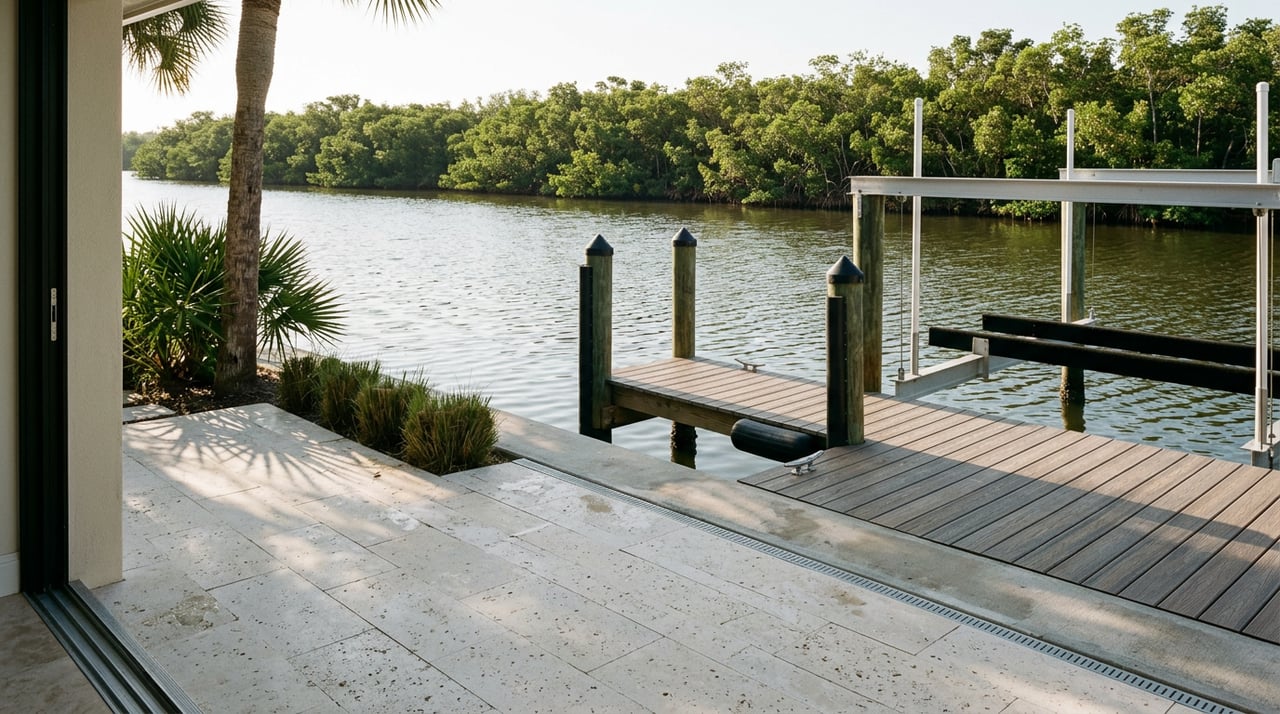
You enjoy calmer water that is ideal for small boats, center consoles, paddleboards, and on‑water entertaining. Many lots feature private docks and lifts, which makes spontaneous boat trips easy and practical. If you need public access for trailering, the Palm Valley area offers public ramps that connect you directly to the ICW. You can review one local option by checking the Palm Valley East ramp details for orientation on location and amenities at the Palm Valley public ramp.
Boating access and navigation
Intracoastal boating benefits
The Intracoastal Waterway provides sheltered routes north and south with straightforward handling for most recreational boats. Many homes have private docks with lifts. Before you buy, confirm permitted slip size, channel depth at low tide, and the status of any dock and lift permits. If a home sits on a canal or tidal creek, ask whether that channel is maintained and who pays for dredging if it is required.
Oceanfront boating considerations
Oceanfront living puts you on the beach, not at a protected harbor. Most oceanfront parcels do not support larger vessel launching at the property. If you plan to run offshore often, you will likely stage from the Intracoastal or a marina where loading, fueling, and boarding are safer in calm water.
Project timing and access notes
Shore protection work and beach renourishment can affect staging and public access for limited periods. The U.S. Army Corps of Engineers Jacksonville District has a Coastal Storm Risk Management program for parts of South Ponte Vedra and Vilano Beach that outlines dune reconstruction and scheduled renourishment cycles. For planning context, review the USACE project overview for South Ponte Vedra and Vilano Beach and ask whether a specific property lies within an active project reach.
Privacy and everyday noise
Oceanfront lots often feel private toward the water since you have no neighbors between your home and the horizon. That said, proximity to a public beach access can raise foot traffic at predictable points. Intracoastal homes can offer larger setbacks and natural buffers like trees or marsh. Dock spacing and neighbor boating patterns also shape your day‑to‑day privacy, so note dock locations on adjacent parcels.
Maintenance and construction realities
Oceanfront maintenance
Beachfront properties face direct wave action, storm surge, and ongoing shoreline change. Dunes and berms are managed in partnership with county and federal programs, and some areas are scheduled for periodic renourishment. You can see design considerations and renourishment planning in the USACE coastal project documents. Expect elevated construction with piles, careful dune vegetation management, and corrosion‑resistant materials. Shoreline armoring and seawalls are regulated and require the right permits.
Intracoastal maintenance
Bulkheads, seawalls, pilings, docks, and lifts are the primary recurring systems to inspect and maintain. Materials age differently in saltwater. Wood piles can be vulnerable to marine borers, while concrete and steel solutions have distinct lifespans and costs. If the home sits on a canal or creek, verify sedimentation patterns and whether the owner or community maintains depth. Always confirm that dock and lift structures were properly permitted and inspected.
Salt air for both
Roofs, metals, exterior finishes, and HVAC equipment wear faster in coastal conditions. Plan for more frequent exterior care than you would inland, regardless of which side you choose.
Permits, rules, and must‑know checks
Coastal Construction Control Line (CCCL)
Florida’s CCCL program regulates construction seaward of the control line. Whether a parcel or improvement sits seaward of the CCCL affects what you can build and how you can alter the site. Before you plan changes, use FDEP MapDirect to locate the CCCL and understand the program.
Flood maps and insurance basics
FEMA Flood Insurance Rate Maps identify flood zones and Base Flood Elevations. Under Risk Rating 2.0, premiums reflect property‑specific factors like elevation, distance to water, and foundation type, so two homes in the same zone can have different prices. Start with FEMA’s guidance on floodplain determinations to review panels and documentation, and see a policy overview explaining how Risk Rating 2.0 changes pricing dynamics in the Congressional Research Service summary. Obtain quotes for the exact address.
Environmental and seasonal rules
Sea turtle nesting season affects exterior lighting and certain nighttime activities on beachfront properties, generally from spring through early fall. St. Johns County outlines lighting protocols and coordination with federal projects. For a local overview, review the county’s USACE project handout and seasonal notes and confirm the specific requirements that apply to your address.
Public programs and timing
County and federal shore‑management programs can influence renourishment schedules, temporary beach access, or funding mechanisms. For board actions and project records, you can browse St. Johns County resolutions and minutes and ask how a property may be affected.
Cost signals to watch
- Oceanfront premium: Limited oceanfront parcels and walk‑out beach living usually command the highest prices in Ponte Vedra. Carrying costs may include higher flood insurance in Coastal High Hazard areas and specialized construction.
- Intracoastal value drivers: Deep lots, quality docks and lifts, and reliable channel depth support strong demand. Flood zones vary by site, and premiums can be lower than direct oceanfront if elevation and setbacks are favorable.
- Both sides: Salt‑air maintenance, windstorm coverage, and elevation can materially affect long‑term costs. Always review recent insurance invoices and permits for shoreline structures.
Your pre‑offer checklist
Use this list to streamline due diligence before you write an offer:
- Confirm FEMA FIRM panel, flood zone, and BFE, then secure an Elevation Certificate if one is not available. Start with FEMA’s floodplain determination guidance.
- Check whether any portion of the parcel is seaward of the CCCL and note permit history using FDEP CCCL MapDirect.
- Request documentation for seawalls, bulkheads, docks, and lifts, including permits, latest inspections, and dates of repairs or replacements.
- For Intracoastal properties, verify dock dimensions, lift capacity, channel depth at low tide, and who is responsible for any dredging of shared channels.
- For oceanfront, ask for dune and beach maintenance history, any recorded beach access easements near the lot, and whether the home is within a federally authorized renourishment reach. Review the USACE coastal project overview.
- Obtain current insurance invoices or quotes for wind and flood. Under Risk Rating 2.0, premiums vary by property features, so compare both NFIP and private options using the CRS Risk Rating 2.0 summary as planning context.
- Confirm sea turtle lighting requirements and any seasonal restrictions that could affect exterior fixtures using the county’s project handout.
Which one fits you
Choose oceanfront if you want immediate beach access, sunrise views, and a truly coastal daily rhythm. Expect to plan around dune stewardship, specialized construction, and active shore‑management programs.
Choose Intracoastal if boating is your passion and you want protected, year‑round access from your own dock. Expect to focus on bulkhead integrity, dock and lift permits, channel depth, and periodic maintenance of waterfront structures.
If you are still on the fence, tour one of each on the same day. Stand on the back deck, listen to the soundscape, and picture your mornings and evenings. Small differences on paper feel very real in person.
Ready to compare specific addresses, permits, and flood panels side by side? Reach out to Eric Womack for a calm, step‑by‑step consult, virtual previews if needed, and a clear plan from shortlist to closing.
FAQs
What are the biggest daily‑life differences between oceanfront and Intracoastal in Ponte Vedra?
- Oceanfront centers on direct beach access, surf, and sunrise views, while Intracoastal living is about calm water, private docks, and easier everyday boating.
How do I check if a Ponte Vedra property is inside the Coastal Construction Control Line (CCCL)?
- Use FDEP MapDirect to locate the line and review program details, then confirm any permits for planned work using the CCCL resource page.
How can beach renourishment projects affect an oceanfront owner in Ponte Vedra?
- Projects can temporarily stage equipment and limit access while work proceeds, and they guide dune and berm maintenance cycles; see the USACE coastal project overview for context.
What should Intracoastal buyers verify about docks and water depth in Ponte Vedra?
- Confirm permitted dock dimensions, lift capacity, electrical, and depth at low tide, and ask who maintains any shared channel or canal if dredging is needed.
How does flood insurance differ for oceanfront versus Intracoastal homes under Risk Rating 2.0?
- Premiums are property specific and consider elevation, distance to water, and foundation type, so two nearby homes can price differently; review FEMA guidance and the Risk Rating 2.0 summary and obtain quotes for the exact address.
Where can I launch a boat near Ponte Vedra if I do not own a dock?
- The Palm Valley area provides public access to the Intracoastal; you can orient yourself using the Palm Valley public ramp.
What are the sea turtle lighting rules for beachfront homes in St. Johns County?
- Beachfront lighting must meet seasonal and shielding requirements during nesting season; the county’s USACE project handout outlines local guidance and timing.